Nore i Numedal · laftehus since 1791

Three houses leavethis valley each year.

Hewn in malmfuru, raised by hand — built to sink two centimetres a metre, and to stand three hundred years.

Nore i Numedal, 60° north.

I

The workshop

We do not build cabins.
We raise houses.

Malmfuru is the Loftsgård family’s workshop at Nore, in the valley Norwegians call middelalderdalen — the medieval valley, where more log buildings stand from the Middle Ages than anywhere else in the country. The houses around us have been carrying their own weight for seven hundred years. They are the standard we work under.

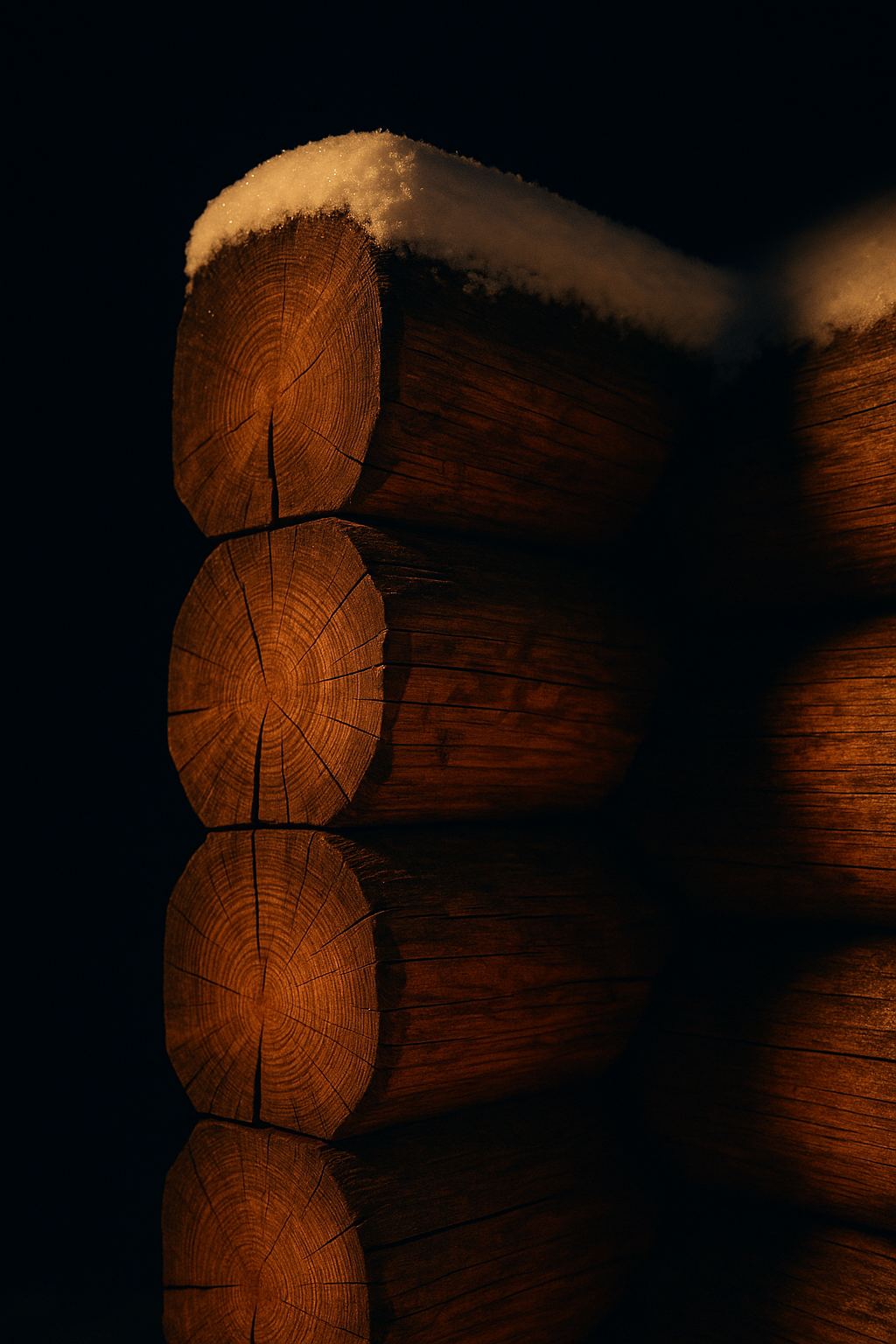
Since 1791 the workshop has done one thing: laft — walls of whole logs, carried entirely by their corner joints. Eight generations have cut the same six-sided notch, the Nore-nov, with axes only. No saw touches the joint; a sawn face drinks water, an axe-burnished face turns it away.

Halvor I · Torstein II · Halvor III · Knut IV · Margit V · Olav VI · Torgeir VII · Embret VIII — Sigrid IX, apprenticed 2021

II

The timber

A tree is answered
seven winters ahead.

Malmfuru — ore-pine — is pine grown slowly enough that most of the trunk has turned to resin-dense heartwood. It is the timber of the stave churches, and it is not bought; it is found, standing, in the steep sides of this valley.

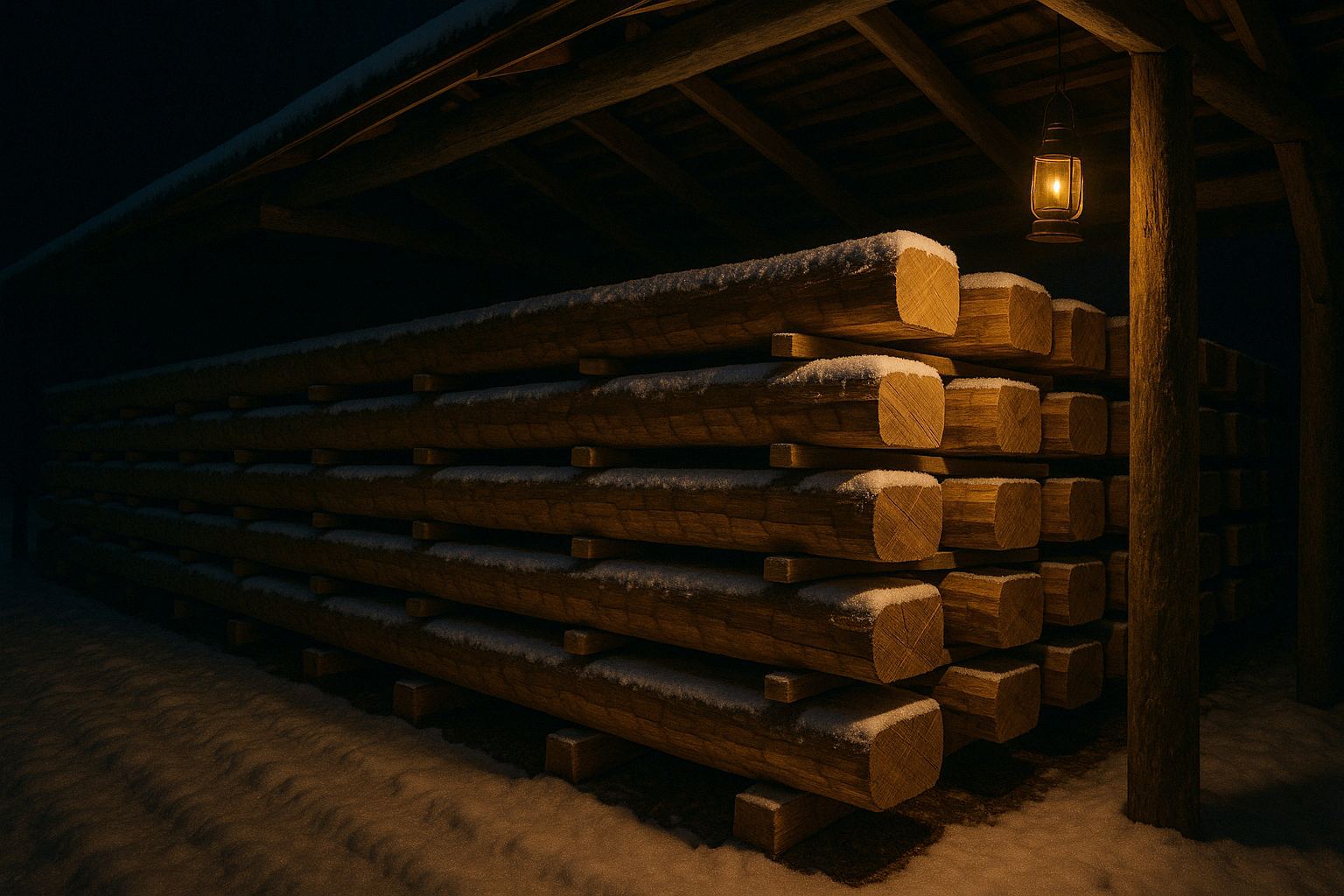
We blaze a chosen tree seven winters before we fell it. Barked at the blaze, the tree spends those years driving resin into its own wound — sealing itself for the work ahead. Felling happens in the two coldest weeks of January, when the sap stands still, and the logs dry seven more years under the open sheds at Nore before an axe touches them.

Timber
Malmfuru, 140–230 years standing
Blazed
Seven winters before felling
Felled
The two coldest weeks of January
Dried
Seven years under open sheds
Stacks of hand-hewn pine logs air-drying under an open shed roof, dusted with snow
III

Årringene · the ring archive

The tree and the workshop
are the same age.

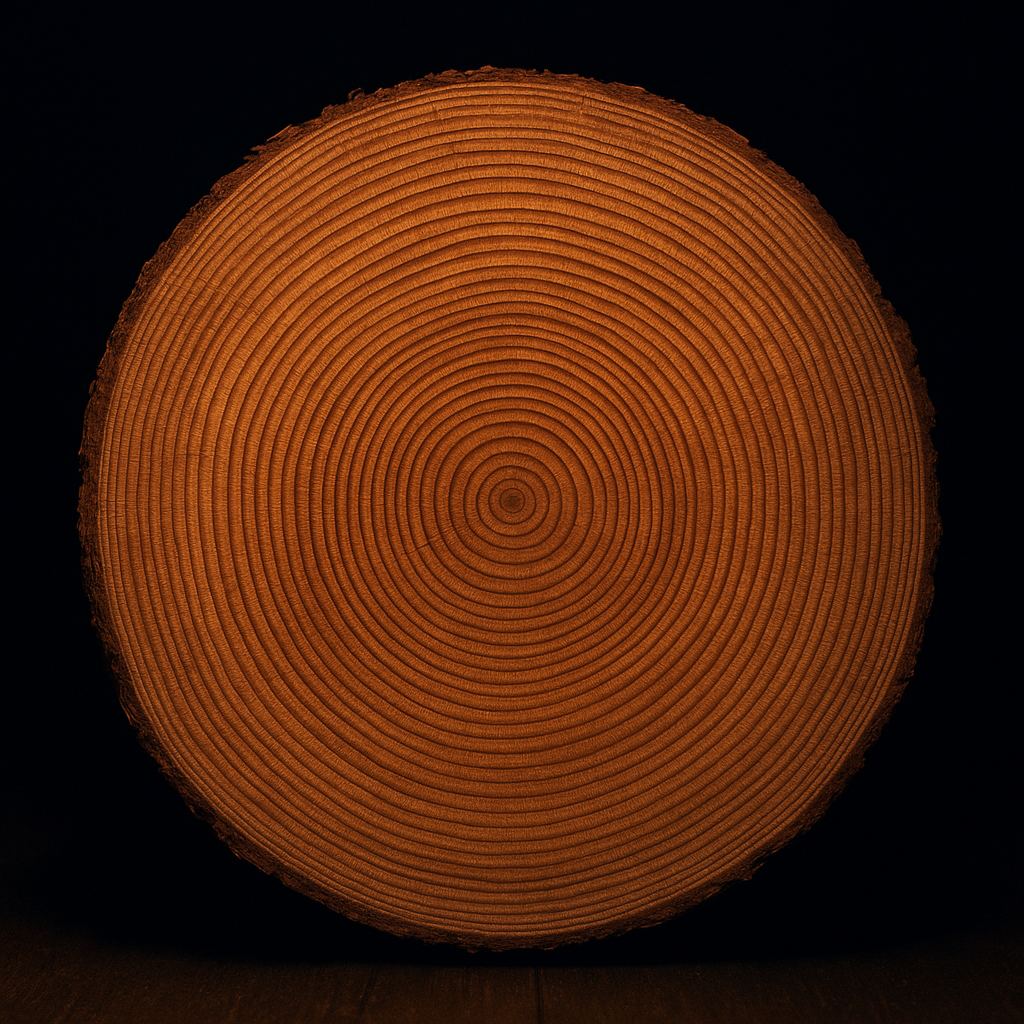
The pine cross-cut in the workshop doorway was felled in January 2019 with two hundred and twenty-eight rings. It germinated in 1791 — the winter Halvor Loftsgård raised his first loft. Draw the scribe across the log; every stop is a recorded ring.

Cross-section of a 228-ring malmfuru log, resin-rich heartwood glowing in warm light

1791

The pith

The seed takes in a burnt clearing above Nore — the same winter Halvor Loftsgård raises the workshop’s first loft. Tree and workshop are the same age.

  1. 1791

    The pith

    The seed takes in a burnt clearing above Nore — the same winter Halvor Loftsgård raises the workshop’s first loft. Tree and workshop are the same age.

  2. 1823

    Torstein II takes the axe

    The second master. The tree is thirty-two rings around; a sapling still, standing in his felling rights.

  3. 1858

    Halvor III takes the axe

    He re-roofs the church barn at Uvdal and cuts the six-sided nov the house still uses.

  4. 1889

    The first husbok

    Knut IV numbers every log of a house shipped in pieces down the valley, and writes the first house book. Three hundred and eighty-four houses stand in it now.

  5. 1904

    A thin ring

    A cold, sunless summer. The ring is a hair’s width — malmfuru is made of years like this one.

  6. 1921

    Margit V takes the axe

    The fifth master, the first woman in the book. She holds the workshop through the hardest decades.

  7. 1943

    Five thin rings

    The war years. The workshop raises nothing and repairs much; the tree keeps its own record of the cold.

  8. 1953

    Olav VI takes the axe

    He plants the drying sheds’ shelter pines and blazes trees his grandchildren will fell.

  9. 1984

    Torgeir VII takes the axe

    The seventh master. He begins the seventh-winter visits — the workshop returns to every house to ease its doors when the setning is done.

  10. 2012

    Embret VIII takes the axe

    The eighth and current master. Sigrid, the ninth, apprentices in 2021.

  11. 2019

    The felling

    Cut in the second week of January, in the still cold, at two hundred and twenty-eight rings. The cross-cut hangs in the workshop doorway; you pass under it on the way to the benches.

IV

The nov · inside the house

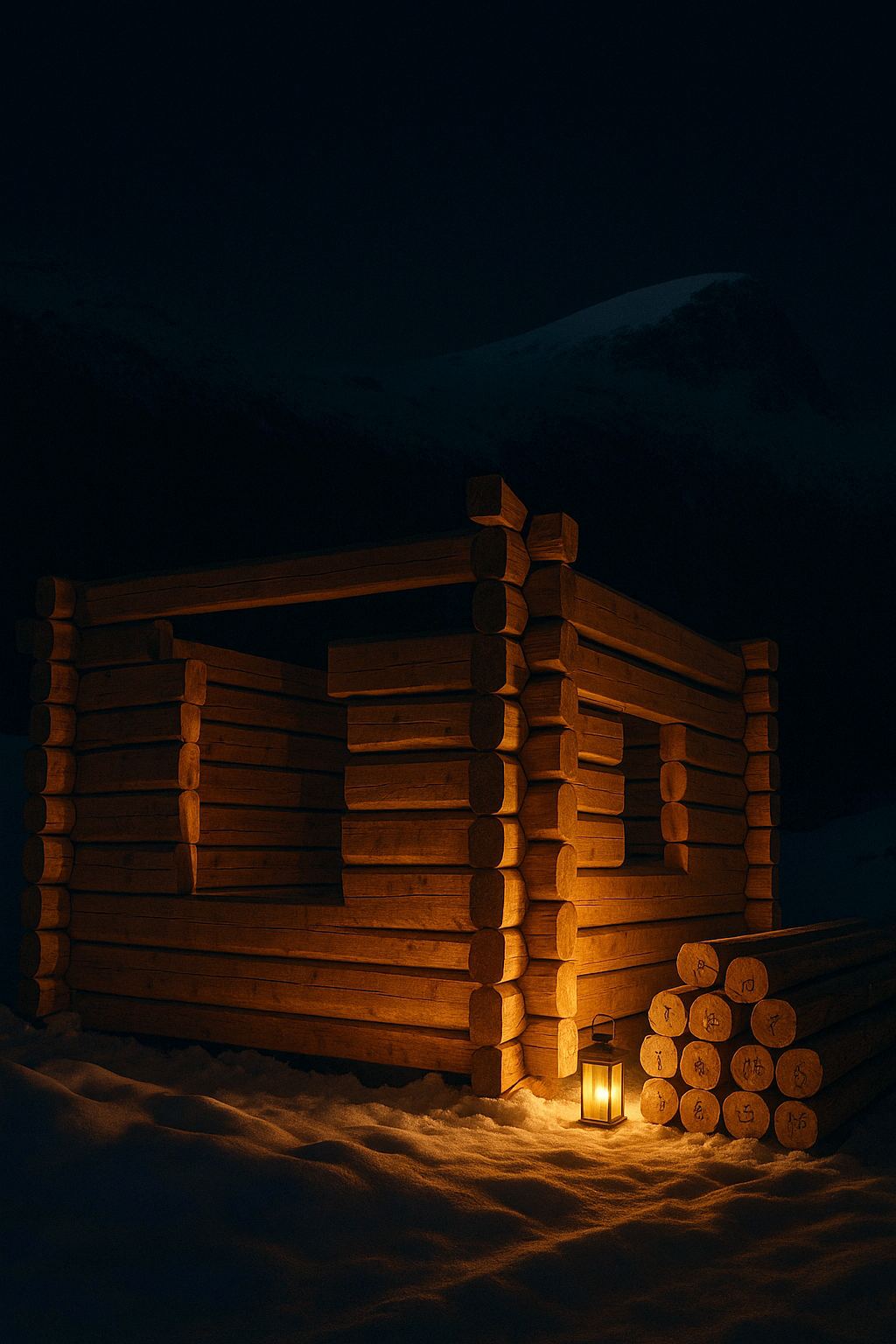
A laft corner joint: hand-hewn log ends lapped in a six-sided notch, dusted with snow

Six faces. No saw.
No nail in the wall.

A laft wall is carried entirely at its corners. Each log is scribed to the one below with the medrag — a groove drawn along its underside with a two-pointed scribe, then hollowed so the log rides its neighbour without a gap. Into the groove goes husmose, moss gathered in August and laid dry. No foam, no sealant, nothing the house cannot outlive.

The Nore-nov itself is cut blind: six faces inside the joint that no one will see again once the next log settles over them. Between four and seven thousand axe-hours go into a house, and most of them are spent here, at the corners, on faces that disappear.

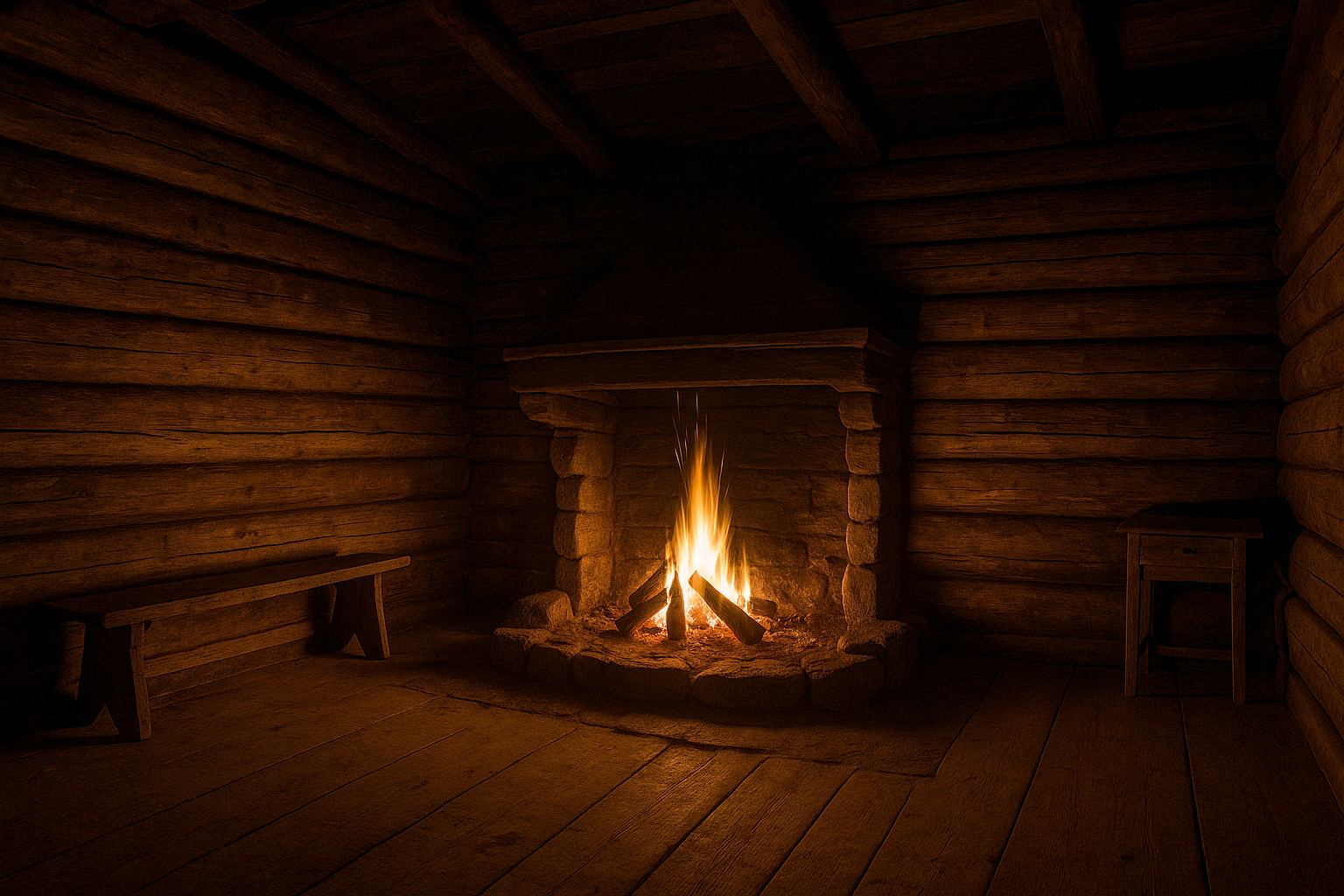
Firelight from an open hearth raking across hand-hewn log walls inside the workshop's oldest room
The old stue at Nore — the room the workshop eats in. Smoke has been blackening these walls since Torstein II.
V

The tun · the houses

Four houses, one yard.

A tun is the yard a farm’s buildings stand around. Ours holds what the workshop has in hand and what it will not forget: the open tinging, the promised, the raised.

Skavlen — the cornice the wind builds on a ridge

HB 384Open to tinging

Skavlen

the cornice the wind builds on a ridge

A one-room-deep mountain house of forty-one logs, drawn for a shoulder of ridge above the tree line. Its timber was felled in January 2021 and stands in the drying sheds now; the walls can rise in the summer after next. The tinging is open: where Skavlen stands, and which way its window faces, is still the owner’s to decide.

  • LogsForty-one, numbered
  • FelledJanuary 2021
  • Walls riseSummer 2028
  • Axe-hoursAbout four thousand

Ask after Skavlen

Vindstille — dead calm — smoke goes straight up

HB 383Promised

Vindstille

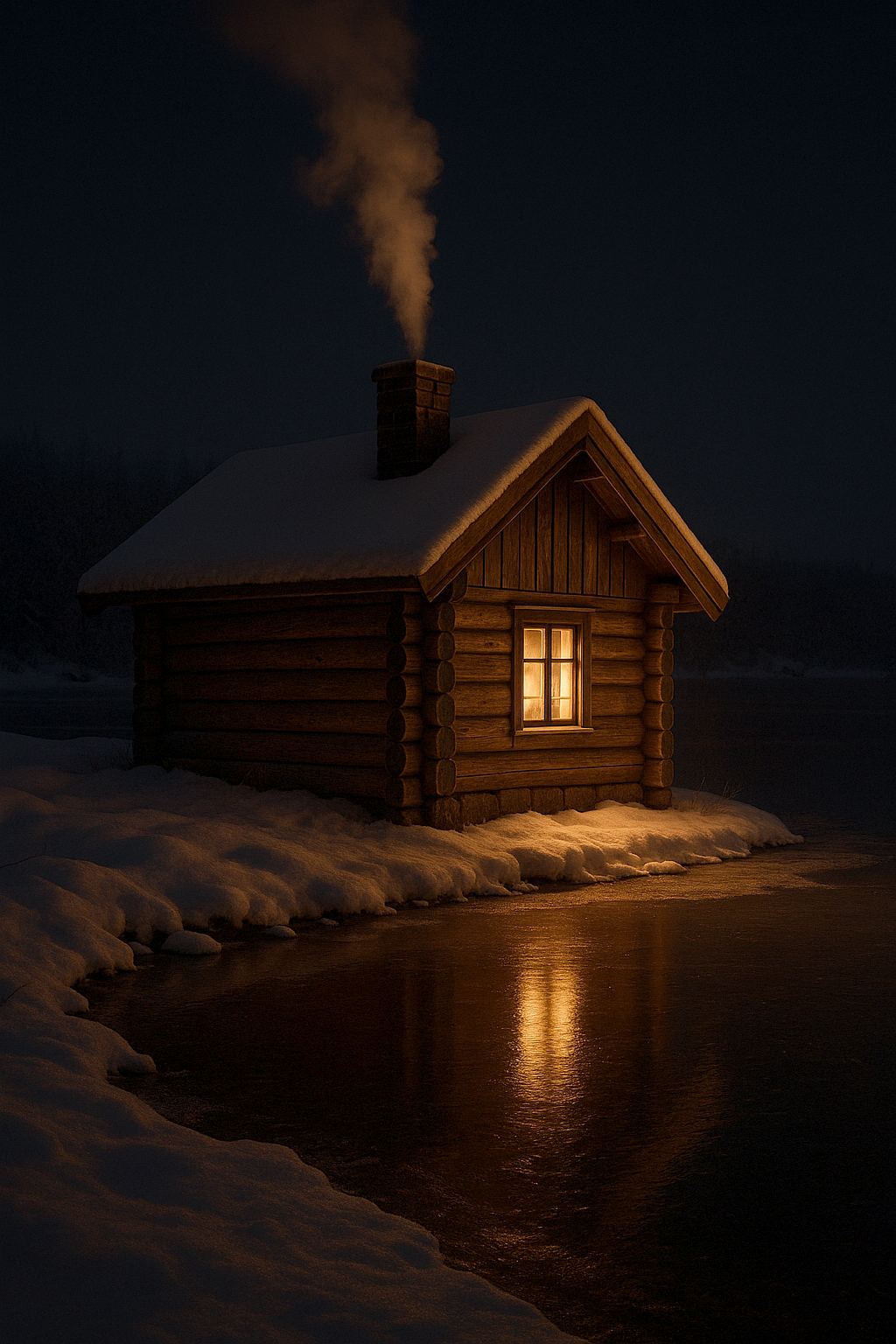
dead calm — smoke goes straight up

A lakeside house of fifty-six logs, promised to a family from Kongsberg. Its nov corners were closed this spring; the sod roof goes on before the first frost. It will spend its first seven winters settling toward the water, as every house of ours does, and we will come back to ease its doors.

  • LogsFifty-six, numbered
  • FelledJanuary 2019
  • Under roofAutumn 2026
  • Axe-hoursAbout six thousand

under roof, autumn 2026

Blåtimen — the blue hour, when snow holds the last light

HB 379Raised

Blåtimen

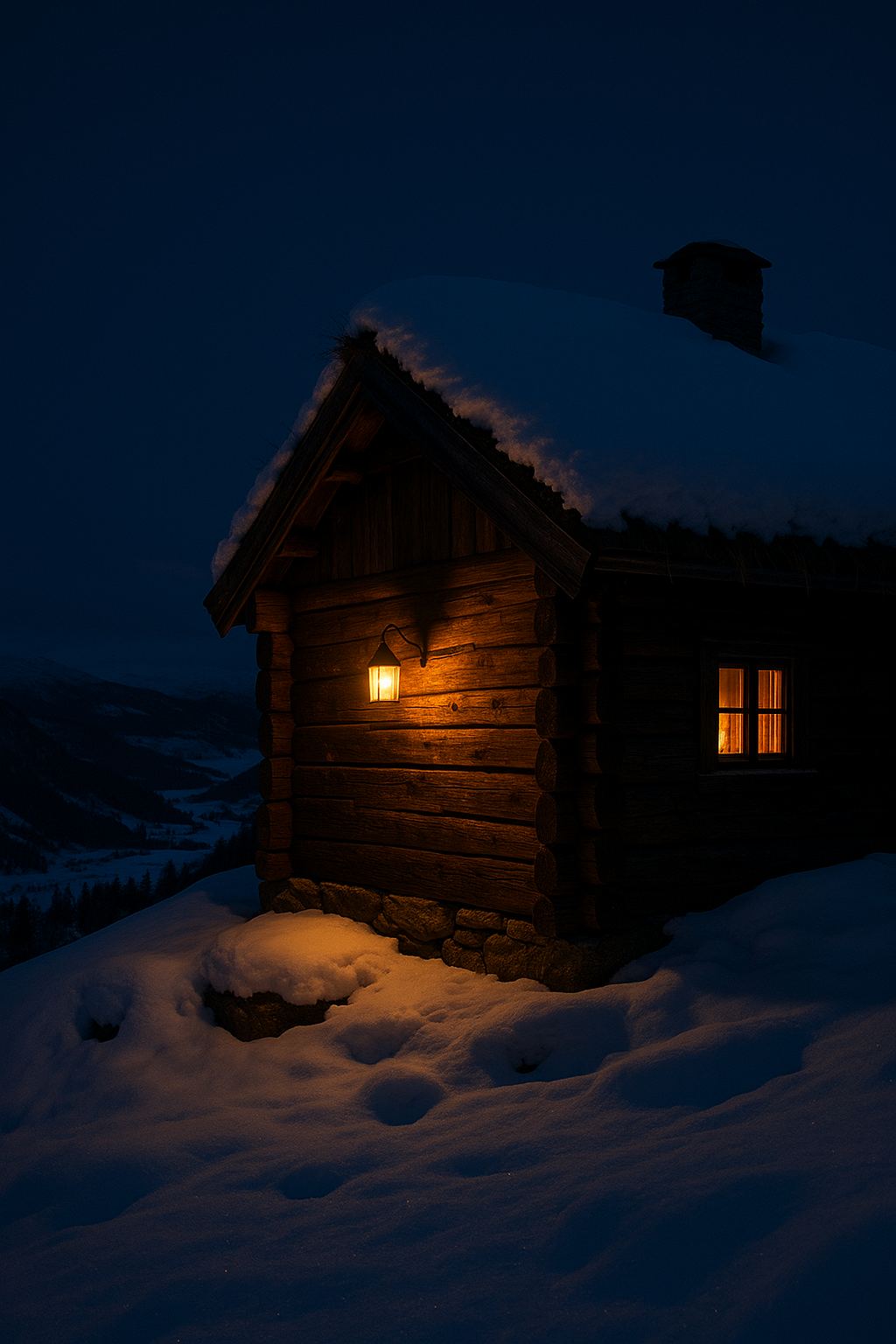
the blue hour, when snow holds the last light

Raised in eleven days in the summer of 2024 on a mountain shoulder above Dagali, from logs felled the January the owner first wrote to us. Sixty-two logs, each one’s felling winter recorded in its husbok. Its first setning winters are behind it; the doors were eased this spring, and the house is done sinking.

  • LogsSixty-two, numbered
  • FelledJanuary 2017
  • RaisedSummer 2024, eleven days
  • Axe-hoursSix thousand eight hundred

stands above Dagali since 2024

Sølvbu — the silver bothy — sun-greyed, never painted

HB 121Raised

Sølvbu

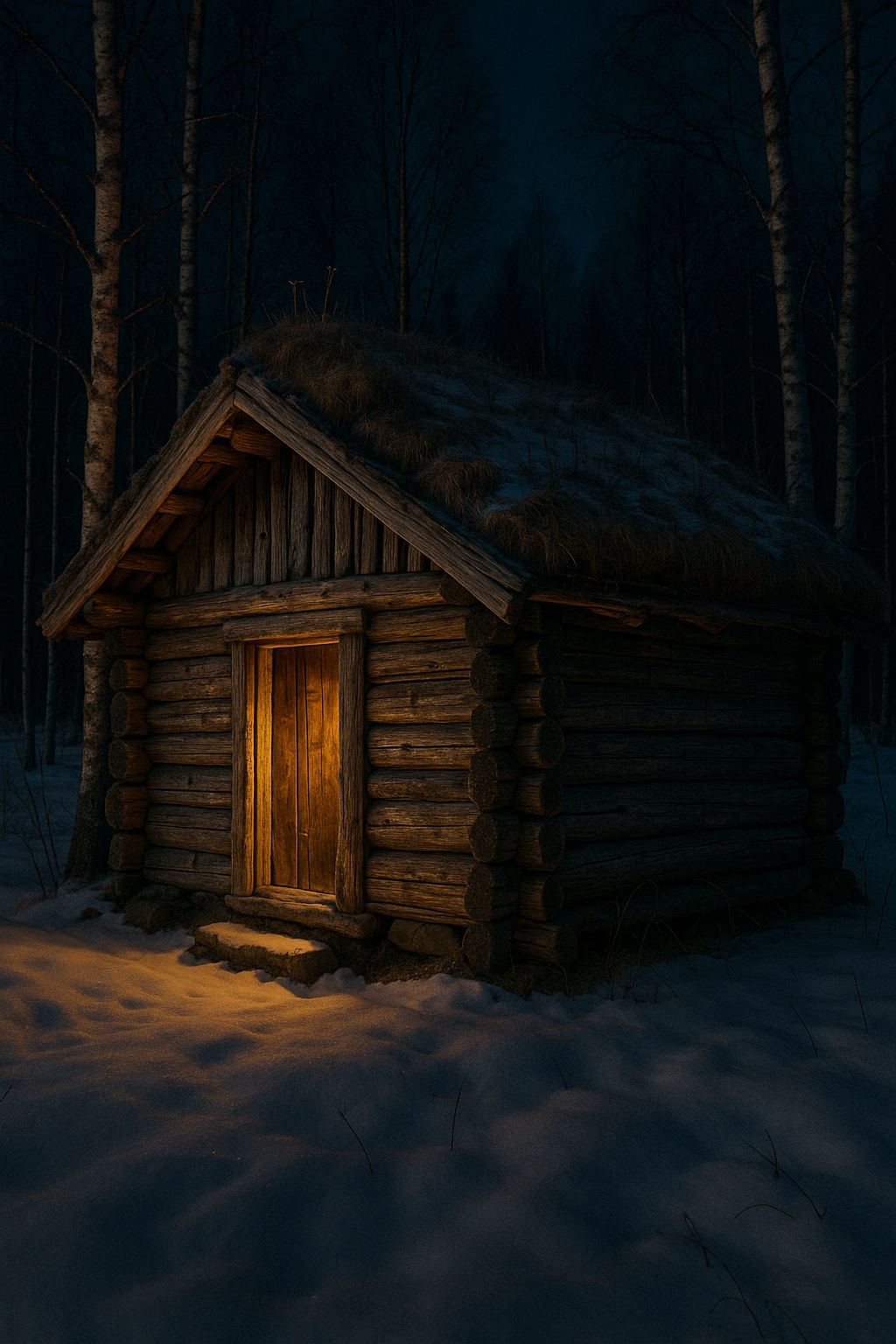
the silver bothy — sun-greyed, never painted

Knut IV’s last house, raised in 1932 and never painted: malmfuru left to the sun goes silver-grey and stops there. It stands a short walk from the workshop, in birches, and we keep it as our measure — when a tinging asks what our houses look like in a hundred years, we do not answer. We hand over the key and let Sølvbu do it.

  • LogsThirty-eight, numbered
  • FelledJanuary 1925
  • Raised1932, by Knut IV
  • PaintedNever

stands at Nore since 1932

VI

Setning · the admission

The house sinks.
We build for it.

Every log house settles. As the moss packs and the timber finds its weight, a new wall sinks about two centimetres for every metre of its height, across its first seven winters. We do not hide this. Doors, windows and chimney are built to ride the setning — sliding jambs, clearance over every frame — and in the seventh winter we come back, unasked, to ease the doors. Then the house is done sinking, and it stands.

The husbok
Every house leaves with its book: each log numbered, its felling winter and its forest recorded. Kept since 1889. Three hundred and eighty-four houses stand in it.
A wall of three metres
Sinks about six centimetres
The seventh winter
We return and ease the doors
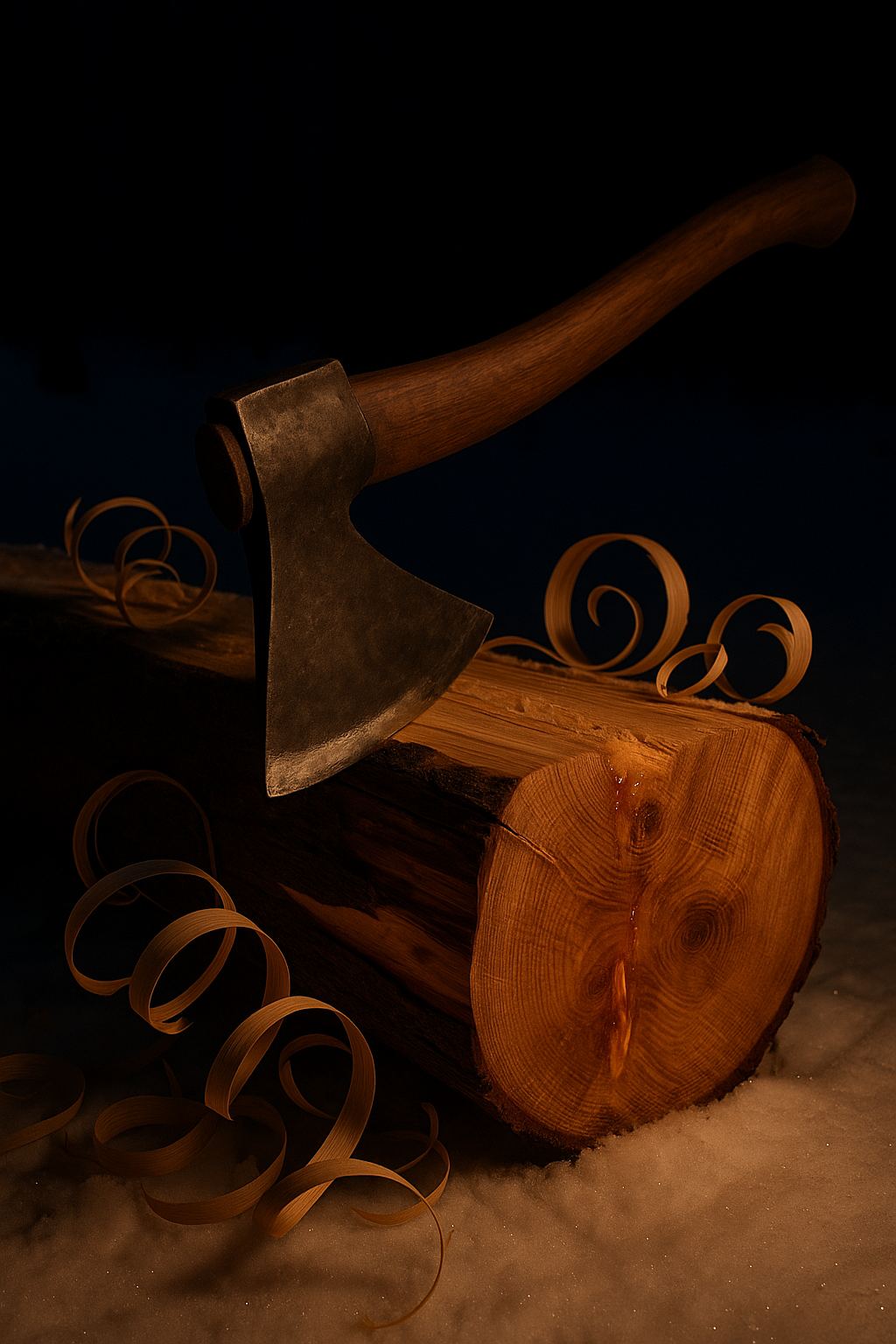
A Norwegian broad axe resting on a half-hewn malmfuru log, pine shavings curled around it

VII · The tinging

Write to Nore.

A first letter needs no drawings. Tell us where the house would stand, what it is for, and who will grow old in it. The timber for one more house is drying now; the book for 2028 holds one open place.

Begin a tinging